Key Takeaways
- 1,400 FQHC organizations with 11,200 facilities serve about 25 million individuals every year
- Federal funding for health centers increased from $750 million (1996) to $2.2 billion (2010)
- Total FQHC revenue across the U.S. was approximately $28.7 billion in 2018
- Health center patients report higher satisfaction compared to low-income patients nationally
What are Federally Qualified Health Centers (FQHCs)?
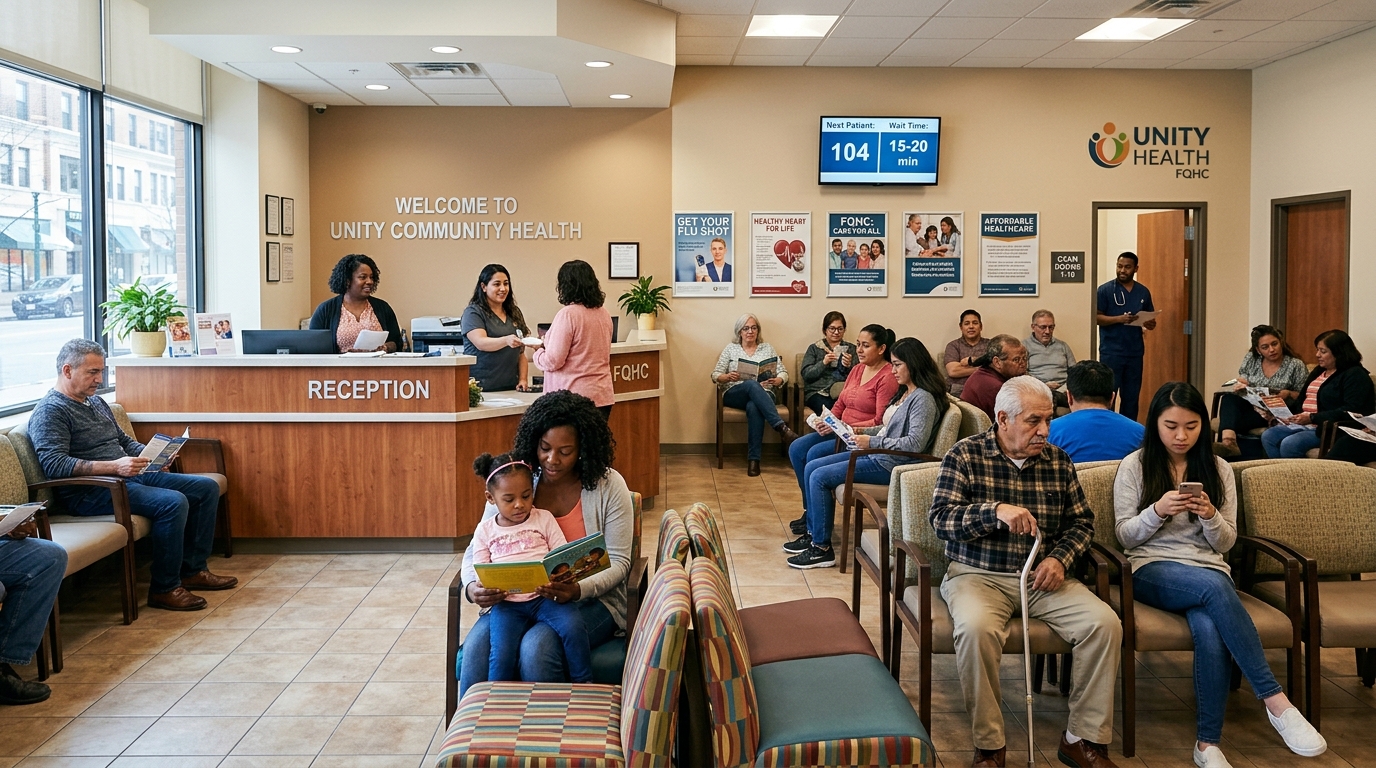
Federally Qualified Health Centers (FQHCs) in the United States are non-profit entities that are composed of clinical care providers, who operate at comprehensive federal standards. FQHCs were originally intended to provide the medically underserved population with quality care to minimize patient load in hospital emergency rooms.
According to Medicare and Medicaid statutes, FQHCs receive federal funding under Section 330 of the Public Health Service (PHS) Act to provide comprehensive primary care services to uninsured and underinsured populations thus ensuring that comprehensive care is available to all, regardless of income or insurance status. Medicare pays FQHCs based on the FQHC Prospective Payment System (PPS) for medically necessary primary health services and qualified preventive health services given by an FQHC practitioner.
To receive federal funding, FQHCs must meet the following requirements:
- Be located in a federally designated medically underserved area (MUA) or serve medically underserved populations (MUP)
- Provide comprehensive primary care
- Adjust charges for health services on a sliding fee schedule according to patient income
- Be governed by a community board of which a majority of members are patients at the FQHC
The Growth of FQHCs
In the early 1960s, there were only 8 health centers in the U.S. Ever since then, the numbers have increased exponentially. By 2001, there were 748 health centers at 4,128 service sites around the nation, serving approximately 10 million individuals.
Federal funding for health centers has increased from $750 million in 1996 to $2.2 billion in 2010. Federal support has increased tremendously over the last 10 years. In 2011, there were 1,128 health centers providing care to more than 8,000 rural and urban delivery sites in the U.S. and territories. Today, there are 1,400 organizations with 11,200 facilities serving about 25 million individuals every year.
FQHCs in Various Regions across the U.S.
The table below shows the number of FQHCs per state. California leads with 178 FQHCs, followed by Texas (73), New York (70), Florida (48), and Ohio (47). Other notable states include Illinois (45), Pennsylvania (44), North Carolina (40), Michigan (39), and Massachusetts (39).
Smaller states and territories also have FQHC representation: Vermont (11), District of Columbia (8), Rhode Island (8), Delaware (3), Virgin Islands (3), Guam (2), and Northern Mariana Islands (2).
Performance of FQHCs
Health centers have outperformed private practice physicians in every aspect of ambulatory care quality measures. They perform better on key metrics including diabetes management, cardiovascular care, preventive screenings, and immunization rates.
Health centers provide more preventive services than other primary care providers, including higher patient visit rates for chronic conditions like diabetes, hypertension, and asthma. This demonstrates the critical role FQHCs play in population health management.
Health center patients report higher levels of satisfaction with the overall care received compared with low-income patients nationally. This is significant given that FQHCs primarily serve vulnerable and underserved populations.
Financing and Reimbursements for FQHCs
FQHCs are required by law to provide services to all people, regardless of ability to pay. The uninsured are charged for services on a board-approved sliding-fee scale, which is based on a patient’s family income and size.
FQHCs are financed through various methods. These include a mix of Medicaid and Medicare reimbursements (with different payment methodologies), direct patient revenue, other third-party payers (private insurers), state funding, local funding, philanthropic organizations, and grant funding from the Bureau of Primary Health Care (BPHC) of HRSA of the U.S. Department of Health and Human Services (HHS).
FQHC Revenue across All Regions in the U.S. (approx. 2018)
Total FQHC revenue across the United States was approximately $28.7 billion in 2018. The breakdown by payer source: Medicaid ($12.96B), Medicare ($2.26B), Private Insurance ($3.05B), Self-Pay ($1.25B), Federal Section 330 Grants ($4.83B), Other Grants and Contracts ($3.34B), and Other ($1.01B).
California leads the nation with $6.16 billion in total FQHC revenue, followed by New York ($2.39B), Florida ($1.19B), Massachusetts ($1.06B), and Texas ($971M). These figures underscore the critical financial infrastructure that FQHCs represent in the American healthcare system.
Source: George Washington University analysis of the Health Resources and Services Administration’s Uniform Data System. Special Data Request, September 2019.